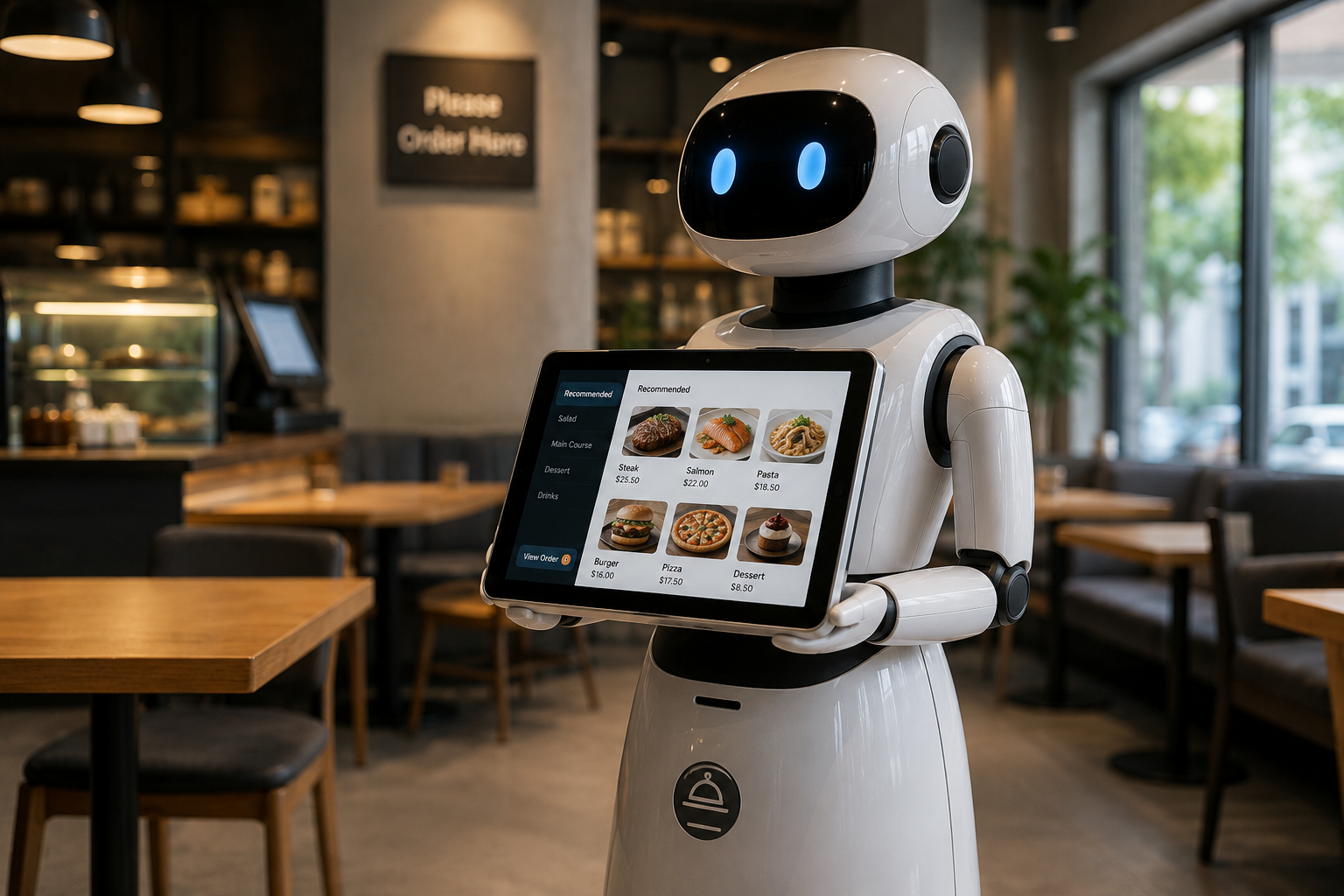
The restaurant industry is entering a new era where technology is no longer limited to billing and payment processing. In 2027, modern Point of Sale (POS) systems are becoming the operational backbone of smart restaurants, connecting artificial intelligence, robotics, inventory management, customer engagement, and kitchen automation into a single ecosystem.
From robot food runners to AI-powered ordering assistants, restaurants are embracing automation to improve efficiency, reduce operational costs, and deliver exceptional customer experiences.
In this article, we’ll explore how POS systems are evolving and why AI-powered robotic restaurants may soon become the industry standard.
The Evolution of Restaurant POS Systems
Traditionally, POS systems were designed to handle billing and payment collection. Today’s cloud-based restaurant POS platforms offer much more:
- Digital ordering
- QR menu systems
- Inventory management
- Customer loyalty programs
- Kitchen Display Systems (KDS)
- Delivery management
- Employee tracking
- Real-time analytics
By 2027, these systems are expected to become intelligent command centers capable of coordinating robots, AI assistants, kitchen equipment, and customer interactions.
How Robotics Works with Restaurant POS Systems
Modern restaurant automation begins with the POS system.
When a customer places an order through a waiter, self-service kiosk, QR code menu, mobile application, or online ordering platform, the POS system instantly processes the request and distributes tasks across the restaurant.
A typical automated workflow looks like this:
- Customer places an order.
- POS system receives and validates the order.
- Kitchen Display System sends instructions to chefs.
- AI predicts preparation time.
- Food preparation status updates automatically.
- Service robot receives delivery instructions.
- Robot navigates to the correct table.
- Customer receives the order.
- POS records completion and updates reports.
This creates a seamless dining experience while reducing manual intervention.
Food Delivery Robots in Restaurants
One of the most visible innovations is the use of autonomous food delivery robots.
These robots can transport food and beverages from the kitchen directly to customer tables while avoiding obstacles and navigating busy dining areas.
Benefits of Food Delivery Robots
- Faster order delivery
- Reduced workload for staff
- Improved service consistency
- Better customer engagement
- Lower operational costs
Restaurants can assign routine delivery tasks to robots, allowing employees to focus on customer service and hospitality.
AI-Powered Ordering Assistants
Artificial Intelligence is becoming a key component of next-generation restaurant POS systems.
AI-powered assistants can:
- Take customer orders
- Recommend menu items
- Suggest upsells
- Answer frequently asked questions
- Support multiple languages
- Process payments
By analyzing previous orders and customer preferences, AI can personalize recommendations and increase average order value.
Smart Kitchen Automation
The future kitchen is connected directly to the POS system.
Automated kitchen equipment can receive orders in real time and assist with:
- Frying
- Beverage preparation
- Ingredient dispensing
- Food assembly
- Quality monitoring
This integration helps reduce preparation errors while maintaining consistency across every order.
AI and Robotics: A Complete Restaurant Ecosystem
Imagine walking into a restaurant in 2027:
You scan a QR code at your table and browse the menu on your smartphone.
An AI assistant recommends dishes based on your previous visits.
After placing your order, the POS system instantly updates inventory and sends preparation instructions to the kitchen.
Once the meal is ready, a delivery robot transports the food directly to your table.
The POS system records the transaction, updates loyalty points, and collects customer feedback automatically.
This level of automation is becoming increasingly achievable as AI and robotics technologies mature.
Essential Features of a Future-Ready Restaurant POS
Restaurants planning for the future should consider a POS system that includes:
Cloud-Based Architecture
Access business operations from anywhere with real-time synchronization.
Robot Fleet Management
Monitor and control multiple service robots from a central dashboard.
AI Analytics
Generate insights into customer behavior, sales performance, and inventory trends.
QR Code Ordering
Enable contactless dining experiences.
Kitchen Display System Integration
Improve communication between front-of-house and kitchen staff.
Real-Time Inventory Tracking
Automatically update stock levels after every sale.
Customer Loyalty Programs
Increase repeat business with rewards and personalized offers.
Mobile and PWA Support
Allow staff and managers to access the system on any device.
Business Benefits of Robotic POS Integration
Faster Service
Robots can perform repetitive delivery tasks quickly and consistently, reducing customer wait times.
Reduced Labor Dependency
Automation allows restaurants to handle higher order volumes without increasing staffing requirements.
Improved Accuracy
Digital workflows eliminate many of the manual errors associated with handwritten tickets and verbal communication.
Better Customer Experience
Customers often find robotic service engaging and memorable, helping restaurants stand out from competitors.
Data-Driven Decision Making
AI-powered analytics provide valuable insights into sales trends, inventory movement, and customer preferences.
Challenges Restaurants Should Consider
While robotics and AI offer significant advantages, successful implementation requires careful planning.
Restaurants should evaluate:
- Initial technology investment
- Staff training requirements
- Maintenance and support costs
- Integration with existing systems
- Data security and privacy considerations
Businesses that approach automation strategically can maximize long-term returns while minimizing disruption.
The Future of Dining
The restaurant industry is rapidly moving toward intelligent automation. By 2027, POS systems will no longer serve as simple billing tools. Instead, they will function as central operating systems that connect customers, staff, kitchens, AI assistants, and autonomous robots.
Restaurants that invest in modern POS technology today will be better positioned to improve efficiency, reduce costs, enhance customer experiences, and remain competitive in an increasingly digital marketplace.
The future restaurant is not just smart—it is connected, automated, and powered by AI.
References
- National Restaurant Association
- World Economic Forum
- Pudu Robotics
- Bear Robotics
- Richtech Robotics
- Miso Robotics
Leave a Reply